
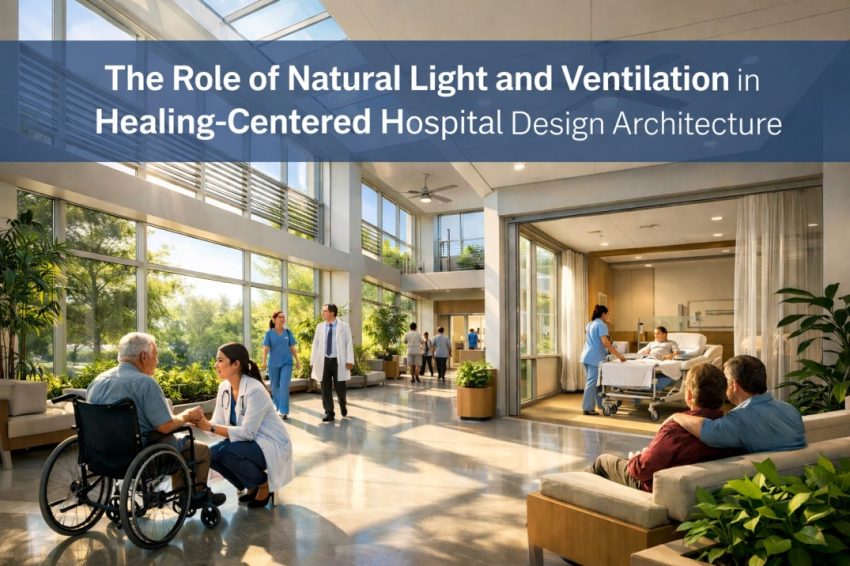
The healthcare environment is an important factor that affects the recovery of a patient, performance of the staff and overall well-being. The modern hospital design architecture today extends way beyond functionality and clinical efficiency. It also incorporates the principles of healing that include natural light and ventilation as their design features. These characteristics not only increase aesthetics but also play a great role in the physical and emotional recovery.
The Healing Power of Natural Light
The psychological and physiological effects of natural light have a great impact on individuals. Studies have always indicated that daylight exposure is associated with the regulation of circadian rhythms, mood improvement, and stress reduction. In hospitals, where patients often spend extended periods indoors, access to sunlight can accelerate recovery and reduce feelings of anxiety or depression.
Huge windows, skylights, light wells and glass partitions are tactfully incorporated in thoughtful hospital design architecture to allow as much daylight as possible. Outdoor facing patient rooms (gardens, courtyards, landscape) have been associated to shorter hospital stays and the decreased use of pain medication. Open areas also help in the feeling of openness and warmth making clinical settings feel less intimidating.
For medical staff, daylight increases their alertness and productivity. The long working hours for nurses and doctors are favorable from natural light which helps to reduce fatigue and supports overall job satisfaction. By prioritizing daylight, hospital design architecture promotes a healthier environment for everyone inside the facility.
The Importance of Natural Ventilation
Clean air circulation is fundamental to healing. Ventilation will decrease air pollution, control humidity, and limit infection transmission. Natural ventilation methods, including cross-ventilation, operable windows, atrium ventilation systems are important in ensuring that the quality of indoor air is preserved.
Over the past few decades, natural ventilation has been used together with mechanical ventilation in advanced hospital design architecture to form hybrid solutions. This approach ensures energy efficiency while maintaining strict hygiene standards. Circulation of fresh air not only reduces the chances of infection but also ensures that the indoor environment is more comfortable for the patients and workers.
Access to fresh air can also have therapeutic benefits. Other facilities may have the patient rooms designed with a balcony or controlled ventilation openings to allow safe airflow. Courtyards and healing gardens serve as natural airways that enhance air circulation and also offer rejuvenating outdoor areas.
Sustainability and Energy Efficiency
Natural light and ventilation also contribute to sustainable building practices. Hospitals are energy-consuming institutions, operating around the clock. Balancing daylight and airflow will allow saving a lot of energy used by artificial lighting and air conditioning.
Solar shading devices, reflective and energy-saving glazing are some of the green building strategies in the design of hospitals. These characteristics control the heat and optimize the natural light. Green ventilation systems save the use of mechanical cooling, which helps save operation costs and environmental degradation.
Hospitals with eco-friendly design elements do not only help to improve the environment but also build healthier inside conditions. Less carbon footprint, cleaner air is ideal for the mission of supporting community health.
Designing for a Healing Experience
The concept of healing centered environments is based on the human comfort and empathy. Natural elements—light, air, greenery, and open spaces—connect patients with the outside world, reducing feelings of isolation. These elements when combined in a well-thought-out manner will make sterile spaces into friendly healing environments.
Technology and nature are the two areas of balance that the future of hospital design architecture is supposed to be. Even though advanced medical equipment and digital systems are necessary, human experience is the core of medical design. The architects by putting more emphasis on natural lighting and ventilation can be able to design the hospitals that prioritize the healing process both physically and emotionally and in a sustainable manner.