
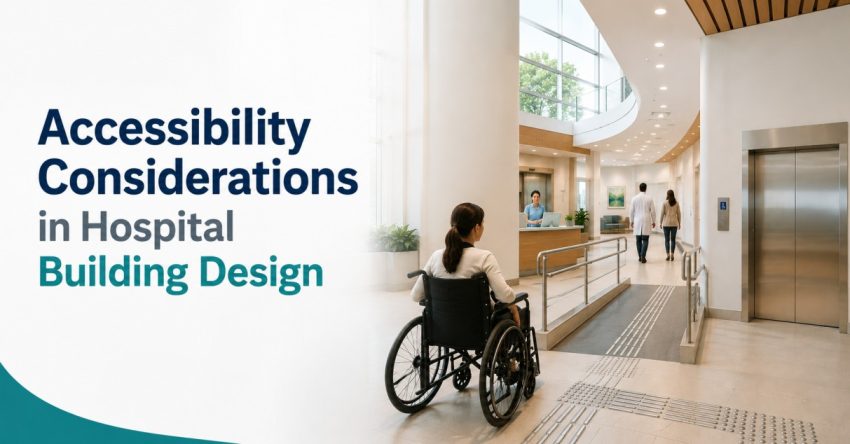
Building design is more than just appearance and functionality for a well-planned hospital building. It should facilitate ease of patient, visitor and staff mobility throughout the healthcare facility, and ensure that this movement is undertaken in a safe manner. Accessibility is one of the most important aspects of contemporary healthcare facilities, as individuals of all ages and physical capacities are treated at hospital. Accessibility considerations in hospital building design not only help to create a better experience for patients but can also lead to greater efficiency and an emphasis on inclusive care.
Accessibility: Easy and Barrier-Free Entry Points
The first step in accessible hospital building design is to provide easy access for all. Hospital should provide ramps as well as stairs, wide doorways and automatic door to accommodate wheelchairs and stretchers. Entrance/exit routes should be well defined and accessible. Barrier free entrance makes for an inviting atmosphere and lessens confusion, particularly in emergency situations.
Spacious Corridors and Movement Areas that serve multiple purposes and locations
Patients, staff and equipment constantly move around in hospitals. Hallways are narrow and can cause congestion and discomfort. Good hospital building design will feature large corridors where wheelchairs, hospital beds and medical carts can move freely. The placement of the spaces will not only make it easier for people to access them but will also make it easier to work in the facility.
Elevators to Accommodate Patients
Elevators are an important part in multi-storey hospitals. Accessible hospital building design allows elevators to be large enough to accommodate stretchers and several people. Buttons should be at an easy height to reach and audio visual cues should direct. Backup power systems are also a critical need in order to keep things running during a power outage.
The Guiding of Signage and Way-finding are Clear.
Hospitals are very busy places and can be stressful to the first-time visitor. Clear and simple signage is an important aspect of hospital building design. Signs must be written in large letters, communicate universal symbols and must be visible and in contrasting color. Directional guides, maps and digital kiosks can make it easier and less stressful for people to move around in the space. Time saving and anxiety reduction in effective way-finding.
Available Handicap Restrooms and Waiting Areas
The facility should be designed to meet the needs of disabled people who are unable to move. This includes enough space around a toilet for wheelchair users to turn, non-slip floors and grab bars. Various seating options (including armrests and wheelchair spaces) should be provided in waiting areas. Planning a hospital building should ensure that the design is comfortable for all, irrespective of physical condition.
Floors and Safety Precautions
A slip resistant floor is a necessity in a hospital setting. Falls are more common in patients, particularly the elderly. Safe hospital buildings have materials that minimize slip hazards and are easily cleaned. The lighting in corridors, stairs and rooms further improves safety and visibility.
Inclusive Design for All Users
Physical mobility is not the only type of accessibility. A comprehensive building design for a hospital also takes into account individuals with visual, audible or cognitive impairments. This encompasses tactile pathways and signage, audio announcements and basic layouts that are easily understood. Inclusive Design means that nobody should be excluded when accessing healthcare services.
There is no parking or external accessibility.
Accessibility should be more than the building itself. There shall be designated parking spaces for persons with disabilities in the parking areas, near to the entrance. Outside the hospital, pathways are smooth, lighting is adequate and signage is clear. The internal and external access is taken into account in a complete hospital building design.
Conclusion
In the design of a building for a hospital, accessibility is an important aspect. All the vital points starting from the entrance to corridors, signage to safety protocols becomes the contributor to an nclusive environment. A hospital building design that accounts for high-quality care, enhance patient satisfaction, and ensure smooth functioning also becomes a healthcare facility which is is accessible to all without any woes.
Also Read: Addressing Staff Shortages in Hospitals with Management Consulting Companies