
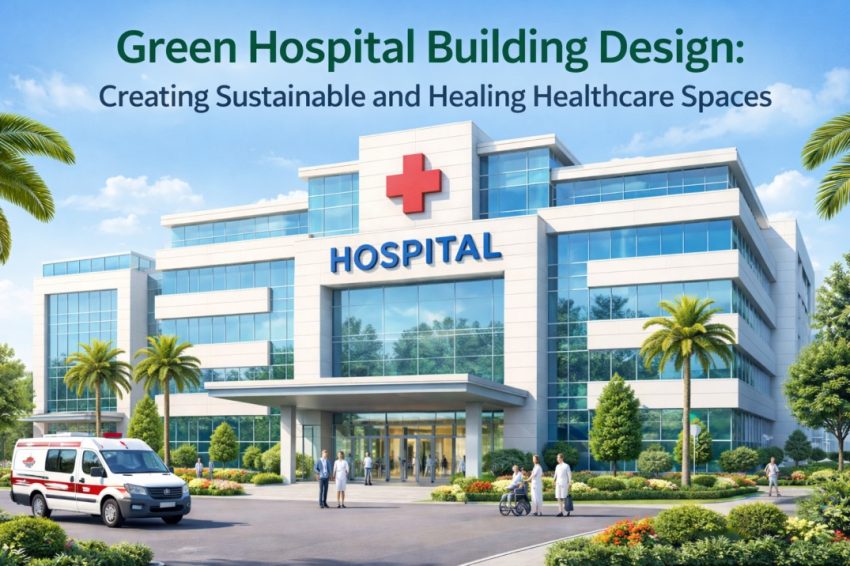
As healthcare facilities operate around the clock, hospitals are among the most energy-intensive building types. With rising environmental concerns and operational costs, the concept of green hospital building design has gained significant importance. This approach focuses on creating healthcare infrastructure that is environmentally responsible, resource-efficient, and supportive of patient well-being without compromising medical performance or safety.
Understanding Green Hospital Building Design
The green hospital building design is a planning of hospitals that reduces environmental impact and increases efficiency and comfort in hospital buildings. It incorporates materials that are sustainable, energy-saving systems, water conservation, and healthy interior settings. This is aimed at ensuring less carbon footprint and also developing areas that would ensure that patients are healed and healthcare personnel are productive.
Energy Efficiency and Resource Optimization
Green hospital buildings are based on energy efficiency. Hospitals consume large amounts of electricity for lighting, medical equipment, ventilation and climate regulation. Green design uses energy efficient lighting, intelligent HVAC, insulation and renewable energy sources like solar power. These actions will save a lot of energy and operating expenses during the building lifecycle.
Sustainable Materials and Construction Practices
Another important factor is the use of eco-friendly and emission-free material. Green hospitals emphasize building materials which are locally sourced, recyclable and non-toxic in order to minimize harm to the environment. The use of low-VOC paint, environmentally-friendly flooring, and long-lasting materials enhance the quality of indoor air and guarantee long performance. The sustainable construction practices can also contribute to the minimization of waste produced during the building process.
Water Conservation and Waste Management
Green design of hospital buildings is very crucial in water efficiency. Water is used by the hospitals on a massive scale for sanitation, cooling systems, and treatment of patients. The installation of low flow fixtures, rain harvesting systems and water recycling will eliminate the use of a lot of water without compromising on hygienic standards. Sustainability and regulatory compliance is further enhanced by having effective waste management systems such as biomedical waste segregation and treatment.
Healing Environment and Patient Well-Being
Green hospital design extends beyond the environmental advantages because it aims at patient-centered healing environments. The benefit of faster recovery and reduced stress are associated with natural day light, green landscaping, reduction of noise and enhanced air quality. Research indicates sustainability is a factor in clinical success as patients in environments designed with nature and integration show improved outcomes and reduced hospitalization.
Economic and Operational Benefits
Although the green design of buildings used for hospitals are more expensive to install but the design provides financial returns in the long run. The benefits are reduced energy and water bills, less cost of maintenance, and better asset value in the long run. Also, in the green hospitals, staff satisfaction and productivity are usually increased, which lowers turnover and disruption of operations.
Conclusion
The concept of green hospital building design is a progressive idea in the medical structure. It integrates sustainability, efficiency, and patient-centric planning, which results in environmental responsibility and operational resilience hospitals. With the further increasing need in healthcare, designing a green hospital building is not only an environmental option, but it is also a business investment into a healthier society and a green healthcare system.
Also Read: Key Principles of Modern Hospital Planning and Designing