
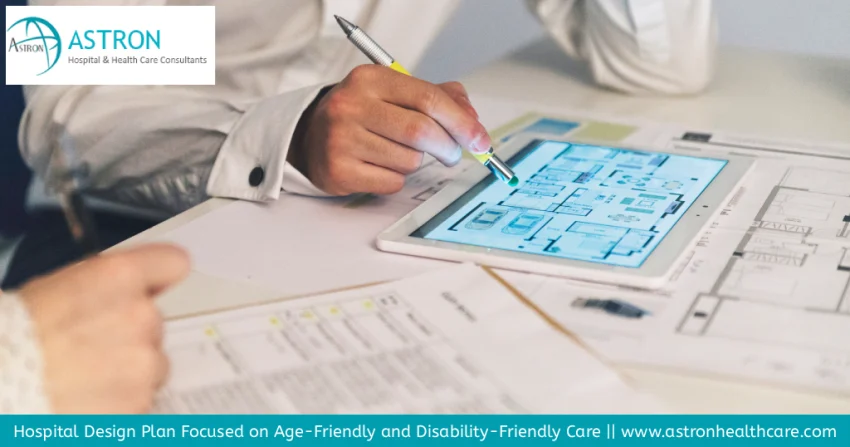
The hospital design plan should target people of different ages, yet people aged over fifty and disabled individuals should be given special attention. They constantly experience difficulties associated with mobility, vision, hearing, and comfort. By incorporating both age-friendly and disability-friendly features in design, hospitals make their environments safer, easy to move around, and dignified to patients and other visitors. A proper hospital design plan targeted at these addresses will make healthcare easily reachable and stress-free to all.
Why Age-Friendly and Disability-Friendly Planning Matters
Some of the commonest patients in hospitals include older patients and patients with disabilities. Some of them use walking aids, wheelchairs or support of a caregiver. Even the most basic exercises such as going in and out of corridors or to a counter may be hard without proper planning. A plan of the hospital design that takes into account such daily issues assists in minimizing accidents, confusion and discomfort. It also helps families and the people taking care of them who in most cases bear much of the burden.
Hospitals with an accessible design demonstrate that the hospitals are aware of the physical and emotional needs of these patients. This will build trust and enhance the care experience.
Creating Safe and Spacious Pathways
Age-friendly and disability-friendly hospital design plan, one of the initial steps in it development, is to make sure that movement is easy and safe. Large corridors allow the free movement of wheelchairs and strips. Falls are the main risks that elderly patients face, so non-slip flooring can be used. Even movements among the floors and ramps do not provide any obstacles to the disadvantaged people who are unable to walk the steps.
Accessibility is also easy because of automatic doors at the entrance and department zones. Transparency in corridors minimizes misunderstanding among patients with poor sight since they would move around with little or no assistance.
Improving Accessibility through Smart Layouts
The layout of a hospital should be such that it facilitates accessibility. Highly frequented departments by the seniors such as diagnostic centers, physiotherapy units, and geriatric clinics among others should be near the main entrance or lift lobbies. This saves time and distance that is covered on a daily basis.
Support rail, wider-entrance, accessible sinks restrooms are needed. Chairs have hard armrests to ensure the comfort of older patients who are able to sit and stand without any difficulties. These considerate design decisions decrease the level of physical stress and enhance comfort when attending hospitals.
Enhancing Comfort with the Right Lighting and Acoustics
Disability-friendly and age-friendly hospital planning should also concern the lighting and sound. The light is bright yet soft so as to minimize shadows that will help older individuals to see well. Lighting in corridors, stairways and waiting rooms is good to avoid accidents.
Individuals with sound problems usually find it challenging to work in a place of high sound. The design plan of a hospital that includes sound absorbing material helps to reduce the echo and makes communication easier. Less noisy environments also ensure nervous or sensitive patients are relaxed during treatment.
Clear Signage and Way finding for Easy Movement
Signage is significant in ensuring that hospitals become navigable. The massive, bold fonts, the contrasted colors, and the minimal symbols aid the aged and individuals with poor vision to navigate. The hospital design plan with a standardized wayfinding within the floors minimizes confusion and eliminates delays on accessing the appointments.
Patients are free to move around on color-coded areas and clearly marked pathways. The independence is quite useful to elderly people and those who desire to experience confidence in a new environment.
Comfortable Waiting and Recovery Areas
The waiting rooms are supposed to be furnished with stable chairs that have armrests, sufficient leg room and are provided with a relaxing environment. This type of seating alleviates fatigue and contributes to posture. Call buttons that are easily accessible and adjustable beds in the recovery areas, as well as clean and tidy arrangements, can make a significant difference.
Such basic modifications make people feel safer and do not require their support at all times; patients feel more in control of the surrounding world.
Integrating Technology to Support Accessibility
The latest design plans of hospitals also have digital tools that support older and disabled patients. The check-ins is easier with touch-screen kiosks with bigger icons, voice-ordained directions, and wheelchair-accessible heights. Digital display boards with updates on the queue, corners with telemedicine and sensor-based lighting enhance convenience and safety.
Conclusion
An age-friendly and disability-friendly care hospital design plan will provide a hospital with an environment where all the patients will be able to move, wait, and recover. Considerate designs, secure routes, unobstructed signage, and helpful technology make hospitals available and friendly. With a higher focus on the needs of the older adult and the people with disabilities, hospitals create the environment where dignity, independence, and improved health outcomes are achieved by everyone.
Also Read: Using Color Psychology in Hospital Planning and Design