
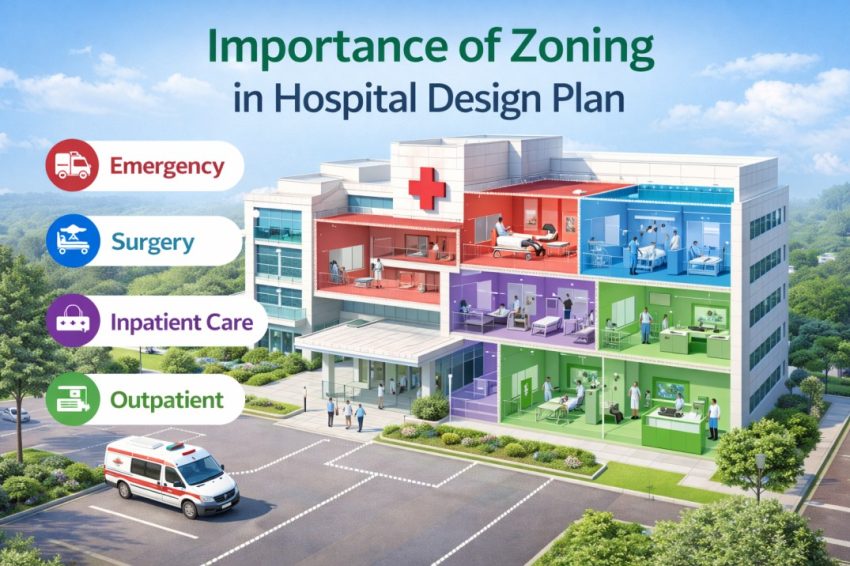
Hospital design is a highly specialized field where efficiency, safety, and patient care must work in harmony. Among the many planning elements, zoning plays a vital role in shaping a functional and effective hospital environment. A well-planned zoning strategy ensures smooth movement, minimizes risks, and supports the complex workflows that define modern healthcare facilities.
Understanding Zoning in Hospital Design
Zoning within the hospital plan design is a strategic subdivision of the hospital into specific functional units in terms of activities, level of access, and patient needs. The zones are all meant to execute a certain role, whether it is the patient care, diagnostics, administration, support services or the public areas. Effective zoning of these functions is used to ensure that the organization of these functions is in a logical order making the facility very clear and effective.
Enhancing Patient Safety and Care
Patient safety is one of the main issues that make zoning significant in the design of hospitals. Hospitals decrease the number of risks of infection and unnecessary exposure by isolating high-risk departments, including operation theatres, intensive care units, and emergency departments, and creating a barrier between them and ordinary or administrative ones. Zoning is also used to provide controlled access points so that sensitive areas are only accessible by authorized medics and this has improved the overall care delivery and safety of patients.
Improving Workflow and Operational Efficiency
The hospitals operate with multifaceted and ongoing processes among the doctors and nurses, patients, equipment, and supplies. These workflow processes are facilitated through proper zoning to minimize the travelling distance and to prevent congestion. In the case of inpatient wards or operation theatres, it is possible to place diagnostic services nearby to make faster decisions and treatment. Efficient zoning is one that minimizes time wastage, staff exhaustion as well as enhancing inter-departmental coordination.
Infection Control and Hygiene Management
The issue of infection control is a major one in the healthcare setting. Zoning assists in establishing clear separation of sterile, semi-sterile and non-sterile space. The reason behind this segregation is to ensure the standard of hygiene and eliminate the chances of cross-contamination. Specific areas of waste disposal, laundry, and biomedical disposal also ensure purity and compliance with regulations in the hospital.
Managing Public and Restricted Areas
Hospitals serve a wide range of users, including patients, visitors, healthcare professionals, and support staff. Zoning helps manage these diverse groups by clearly defining public, semi-public, and restricted areas. Reception areas, waiting lounges, and outpatient departments are typically placed in easily accessible zones, while critical care and staff-only areas are located deeper within the facility. This clear distinction improves navigation and enhances patient and visitor experience.
Flexibility and Future Expansion
An effective zoning plan enables the hospitals to be able to respond to evolving healthcare demands. With the changing medical technology and high patient flow, hospitals usually require the need to expand or re-model departments. Adequate zoning offers room to expand it in the future without having to interfere with the current activities. Modular zoning plans enable the process of bringing new services into the picture or renovating old facilities to become more efficient.
Conclusion
Zoning is extremely important in a hospital design plan. It is the foundation of patient-centric, efficient, and safe healthcare infrastructure. Effective zoning will facilitate the smooth operation of the hospital as it improves workflow, enhances safety measures, supports infection control, and provides the hospital with the opportunity to operate in the future and provide high-quality care to patients. Considerate zoning is thus a very important long-term investment in the favorable success and sustainability of any healthcare institution.
Also Read: Green Hospital Building Design: Creating Sustainable and Healing Healthcare Spaces