
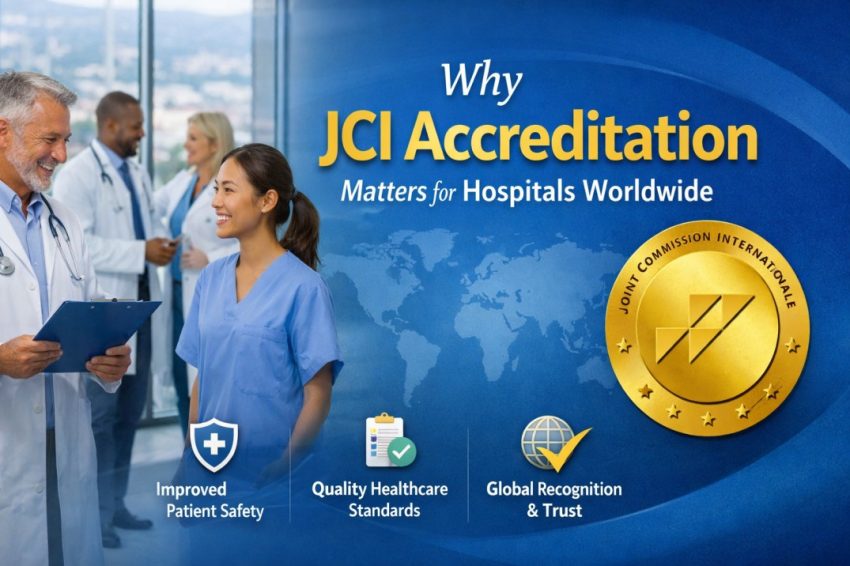
In today’s rapidly evolving healthcare landscape, quality and patient safety have become top priorities for hospitals across the globe. One of the most recognized benchmarks for excellence is Joint Commission International, widely known for setting rigorous healthcare standards. Achieving JCI accreditation is not just a badge of honor—it represents a hospital’s commitment to delivering safe, effective, and patient-centered care.
Enhancing Patient Safety and Quality of Care
At its core, JCI Accreditation focuses on improving patient safety. Hospitals that pursue this accreditation must comply with stringent international standards covering infection control, medication management, and surgical safety. These standards reduce the likelihood of medical errors and ensure consistent, high-quality care.
By following these guidelines, healthcare organizations can implement standardized processes that minimize risks and improve clinical outcomes. This not only protects patients but also enhances the hospital’s reputation as a trusted healthcare provider.
Building Global Trust and Recognition
JCI accreditation has one of the greatest benefits, which is its worldwide acknowledgment. Modern patients are more educated and tend to travel to get treatment beyond their borders. Accreditation will guarantee them a hospital that fulfills acceptable standards of care internationally.
In the case of hospitals, this will translate to more credibility and attracting international patients. The accredited facilities are especially beneficial to medical tourism since patients prefer hospitals that demonstrated their dedication to the quality and safety.
Promoting Continuous Improvement
Healthcare is an evolving profession and it takes constant effort to stay on the high standards. JCI accreditation is not a final goal; it promotes constant development by periodic assessment and revision.
To ensure compliance, hospitals are required to constantly identify and revise their processes, train their personnel and implement best practices. This culture of continuous improvement makes sure that the healthcare providers are always informed on the new developments and provide maximum care at any given time.
Strengthening Staff Competence and Engagement
The other significant feature of JCI accreditation is that it is concerned with the training and development of the staff. Accredited hospitals invest in training their healthcare providers in relation to international standard, safety practice, and quality improvement practice.
This improves staff competence, as well as staff morale and engagement. Proficiency in healthcare workers and their confidence in the process they are undertaking make them more qualified to offer effective and understanding care to patients.
Improving Operational Efficiency
Hospital activities must be efficient to provide efficient and timely care. JCI accreditation assists organizations to improve their workflow through the development of systematic policies and procedures.
All processes are thoroughly planned to provide efficiency and transparency to patients since the admission till their discharge. This minimizes waiting time, better use of resources and enhanced patient satisfaction.
Conclusion
JCI accreditation is a universal healthcare excellence measure in the world where quality of healthcare can be extremely different. Not only does it improves patient safety and clinical outcomes but also establishes trust, facilitates continuous improvement, and consolidates the operations of the hospitals.
For hospitals that intend to be competitive in the international healthcare environment, accreditation is a compelling move toward the provision of global care and prolonged prosperity.
Also Read: The Role of Natural Light and Ventilation in Healing-Centered Hospital Design Architecture