
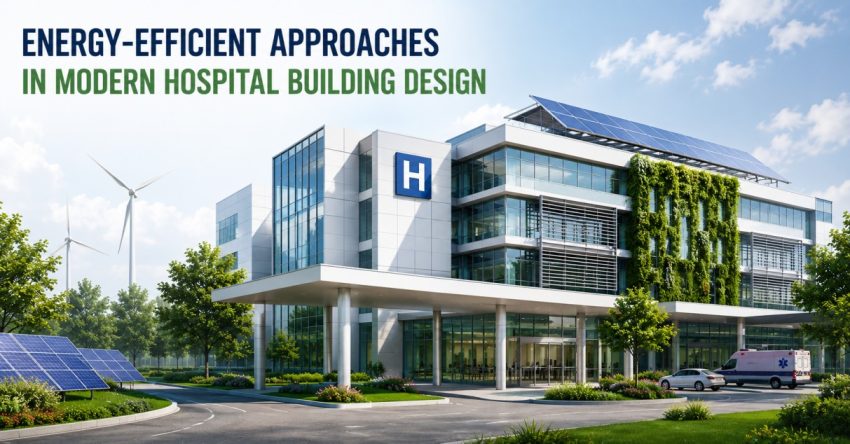
Hospitals are one of the most energy-intensive buildings because they consume energy round the clock. There is no aspect of a healthcare facility that is not reliant on a reliable source of energy, from lighting and air conditioning, to medical equipment and emergency systems. With a focus on lowering costs and environmental effects, energy efficiency is a key factor in hospital building design.
Rapidly the modern healthcare facilities are now being planned with energy conservation and sustainability in mind. A well-designed Hospital Building Design can help to reduce energy usage, and also provide a comfortable environment for patients, visitors, and healthcare professionals.
The Importance of Energy Efficiency in Hospitals
In hospitals, the energy usage is much more than usual in many other commercial buildings because the hospitals are continually operating. High energy use includes such things as heating, ventilating, air conditioning, lighting and special medical equipment.
A hospital building design that is energy efficient can assist the health care facility to save utility costs and continue patient care. It also contributes to environmental objectives by minimizing environmental footprints, including GHG emissions and natural resources conservation.
Maximizing Natural Light
Natural daylight is one of the best methods for making improvements to energy efficiency. A lot of modern hospitals are now constructed with big windows, skylights and open spaces to let sunshine in to various parts of the hospital.
A well planned out hospital building design can minimize the need for artificial day lighting. Natural light also plays a role in creating a more positive atmosphere, which can have a positive impact on patient comfort and staff well-being.
High-Performance Building Envelopes
The building envelope consists of walls, roof, doors and windows. These factors are all important to regulating heat transfer and indoor temperature.
Insulated walls, energy-efficient glass and reflective roofing materials are often used in modern hospital building design. These features will minimize heating and cooling load throughout the year and achieve lower energy use.
Smart HVAC Systems
Hospitals use a significant amount of energy on their HVAC systems. With the advanced HVAC technology, it is possible to enhance efficiency while still keeping the indoor air quality under control.
Smart HVAC systems with sensors and automated controls are crucial elements of an efficient hospital building design. HVAC systems are instrumental in temperature control and airflow as per how many people are present and the ambient conditions available. This is an efficient system that maintains the temperature level whilst conserving energy and avoiding waste.
Energy-Efficient Lighting Solutions
Lighting is another area in which hospitals can reap substantial energy savings by adopting energy-efficient methods. Lighting using LED systems lasts longer than other lighting systems and requires less electricity as well.
In modern hospital building design, occupancy sensors and daylight-responsive controls work hand in hand with LED fixtures to ensure that energy is not wasted. The lighting system automatically adjusts itself according to the activity in the room and the presence of sunlight.
Renewable Energy Integration
The use of renewable energy is becoming increasingly popular in healthcare facilities and is being considered as a sustainable option. For instance, solar panels can produce a certain amount of the electricity requirements within a hospital to lessen the dependency of conventional electricity.
Renewable energy solutions can be added to the hospital building design with a goal to aid long-term cost savings and increasing energy resilience. With this adoption to a greener initiative, hospitals can keep functioning with more efficiency even during power outage scenario and and minimize their environmental impact.
Water & Energy Conservation Together
Energy efficiency can also be achieved through water conservation measures. Hospitals consume a lot of water during sanitation, patient care and maintenance of the facilities.
Water-saving fixtures, plumbing systems and water recycling technologies are utilized in Modern Hospital Building Design. The reduced water usage will also reduce the amount of energy used in pumping, heating, and treatment facilities.
Building Management Systems
A smart Hospital Building Design uses building management software to monitor energy usage and find inefficiencies, and automatically manages resource use. This can aid in decision making by the facility managers and keep the facility performing at its best.
Conclusion
Energy efficiency has become a critical component of modern health institutions. By using effective designs, incorporating renewable energy sources, and utilizing efficient construction materials, hospitals can make savings while promoting energy conservation. In essence, effective hospital building design is efficient hospital building design.
Also Read: Using Management Consulting Services to Strengthen Healthcare Supply Chain Management