
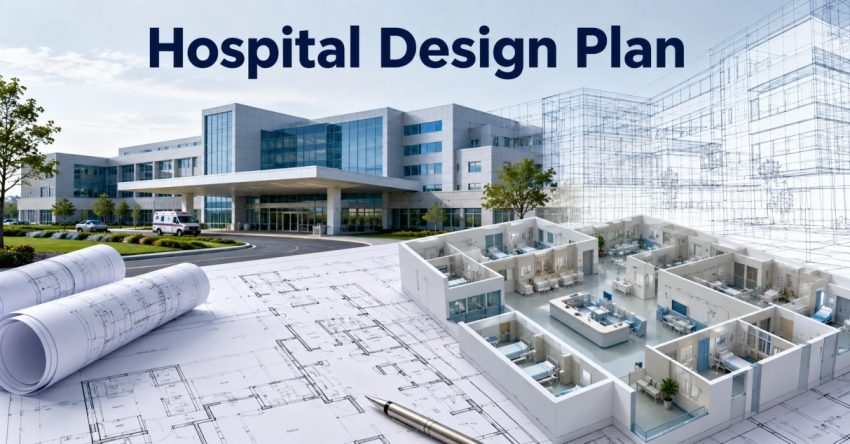
A well planned hospital is more than a building that has medical equipment. It is well planned and provides for patient care, high staff efficiency, patient safety and future expansion. No matter the hospital is new or already existing, planning and design are the steps that are needed to be taken.
A detailed hospital design plan can assist healthcare providers in developing a hospital design that can provide excellent quality care and facilitate daily operations. Each element is crucial to the hospital’s future success in patient volume, patient satisfaction, ands technology.
Assessing Healthcare Needs
The first step in creating a design plan for a hospital is to know the health needs of the community that the hospital will provide care for. This involves determining the number of patients that are likely to be seen, the type of medical disciplines and the situation of emergencies and the future demands for health services.
The needs assessment can be used to figure out how large the hospital needs to be, how many departments there should be, and how much equipment is needed to keep patients happy.
Functional Space Planning
Streamlining the use of space is crucial to optimizing workflow and minimizing delays. Each department should be laid out to provide for ease of patient, staff, equipment and materials movement.
A good hospital design plan provides user-defined Outpatient Service Areas, Emergency Departments, Operating Theatres, Intensive Care Units, Diagnostic Laboratories, Pharmacies, Waiting Areas, Administration Offices and Support Areas. Effective zoning reduces congestion and improves the effectiveness of the operation.
Patient-Centred Design
Today’s hospitals are designed for the patient’s comfort and safety. The comfort of waiting areas, ease of access to entrances, signage, natural lighting and private consultation rooms all help provide patients with a better experience.
Other elements of patient-centred design include accessibility for people with disabilities, infection control features and areas that promote privacy and dignity throughout the treatment process.
Technology and Digital Infrastructure
Digital technologies are more common than ever in the healthcare settings to improve patient outcomes and streamline the organization’s operations. When planning, consider Electronic Health Records (EHR), Hospital Information Systems (HIS), telemedicine, nurse call systems and digital imaging solutions.
When technology needs are incorporated into the hospital design plan, the technology infrastructure can meet present needs and be flexible enough to accommodate future advances.
Safety and Regulatory Compliance
Healthcare regulations, building codes, and fire safety laws and guidelines must all be followed at hospitals. Compliance should not be considered after construction starts, but throughout the planning process.
An emergency exit, fire protection system, medical gas pipelines, waste management area, ventilation system and other safety facilities are all part of an extensive hospital design plan that aid patients and medical staff.
Flexibility for Future Expansion
Healthcare needs are constantly changing and flexibility is a key element in hospital planning. Facilities should be built so they will be able to expand departments, add patients and new medical technologies without a significant structural change.
Future growth plans ensure that hospitals will maintain their efficiency, agility to respond to changing health care requirements and safeguard long-term investments.
Sustainable and Energy-Efficient Design
Today, healthcare buildings are taking a look at sustainability, too. Operating costs are reduced through energy-efficient lighting, water conservation systems, natural ventilation (where appropriate) and environmentally friendly building materials, while meeting environmental objectives.
With these attributes in place, not only is there an enhancement in the use of resources but also contributes towards making a healthier indoor environment for patients and staff alike.
Conclusion
Designing a healthcare facility is a complex process that calls for consideration of a number of factors with the most important ones being patient care, operational efficiency, safety, and future growth. A successful facility starts with a well-designed plan that takes these factors into account. Hospitals can create facilities that meet the healthcare needs, functional layout, technology integration, regulatory compliance, sustainability and expansion requirements of a community, providing years of effective service.
A professionally created hospital design plan can support healthcare organizations to avoid expensive redesigns, enhance daily operations, and establish settings that encourage high-quality medical care. The thoughtful planning in today’s day and age will create the basis for a modern, efficient and patient-oriented hospital in the future.
Also Read: Healthcare Consultancy in India: How It Supports Better Hospital Planning and Operations