
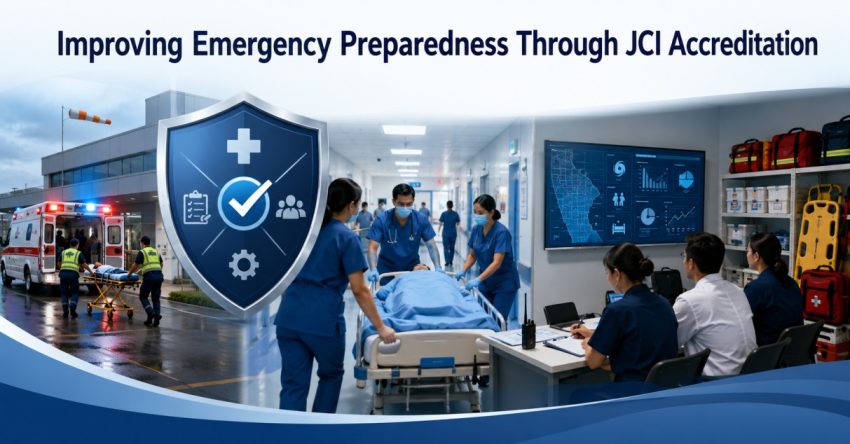
Whether it is any natural calamity, mishaps, disease and mass casualty situations; they all can cause a healthcare emergency at any time. Hospitals should be ready to respond promptly and maintain the provision of safe and effective care to their patients. JCI accreditation offers globally accepted best practices that enable healthcare organizations to enhance their emergency preparedness, interagency coordination and safeguard patients, staff and visitors in a crisis situation.
A hospital that adheres to these standards is more prepared to deal with unexpected events, and continue to provide quality care.
Why Emergency Preparedness Matters
Emergency preparedness goes beyond evacuation plans and back-up generators. It includes risk assessments, developing emergency response plans, training procedures and practicing emergency drills on a regular basis.
JCI accreditation is used to create hospitals’ emergency management programs, which are structured to cover multiple potential emergencies, such as natural disasters, infectious diseases outbreaks, equipment failures, and security concerns. This will help to minimize confusion and decision making time during emergencies.
Developing a detailed Emergency Management Plan
A thorough emergency management plan is a one of the many conditions for JCI accreditation. This plan includes the roles of various departments, communications, resources, and recovery.
Hospitals are urged to look for hazards that may exist in their environment and hospital practices. A risk assessment can help to identify the most likely events to impact services and help healthcare organizations to plan accordingly, so that essential functions do not go down.
Frequent Emergency Drills and Staff Training
If an employee does not know how to perform an emergency plan his/her life will be in danger. JCI accreditation places a strong focus on staff education and regular emergency drills to make sure healthcare professionals are ready and equipped to handle emergencies.
Simulations allow teams to practice emergency response, learn how to better coordinate with one another and get suggestions on how to improve. Regular training also makes sure that new staff members know what to do and how to be safe in case of an emergency.
Improving the communication during disaster
Communication is a critical component of emergency preparedness. There must be effective communication between hospitals, medical staff, emergency services, patients, their families and the police.
JCI standards promote development of effective communication methods, a back-up plan for communicating, and a clear reporting process. Good communication helps to avoid delays, miscommunication and facilitates an effective team decision-making process in emergency situations.
Securing the Safety of Patients and Vital Services
Patient safety is always a most important consideration in any emergency. JCI hospitals have protocols in place for continuity of services, including emergency care, intensive care, surgery, lab work and pharmacy.
Hospitals are equipped with backup power systems, medical supplies, patient records that are secure, and contingency plans to ensure their ability to operate during unexpected disruptions.
The Process of Evaluating and Improving Continually
Preparing for emergency is a continuous process. Hospitals should review their performance after each drill and/or after an actual emergency to see what can be improved.
JCI accreditation reinforces the continuous improvement process by motivating healthcare organizations to revise their emergency plans, update their policies and enhance their response capabilities to improve outcomes from future incidents. This ensures that the hospitals are steadfast and always ready to quickly adapt themselves to any changing risk landscape and healthcare requirements.
Conclusion
It is essential to have emergency preparedness for all health care institutions. Compliance with the standards of JCI accreditation that are widely recognized around the world will assist hospitals in creating a better plan of action, increasing their readiness, effective communication and ensuring continuity of patient care during the crisis.
Emergency preparedness investments will not only bring an institution closer to the accreditation but also increase patients’ and health care professionals’ and community’s trust. Being prepared for any emergency situation allows to handle any emergency situation with ease and assure safety and quality of care.
Also Read: Building Plan Design for Multi-Specialty Hospitals: Key Considerations